 Reviews


 Proudly American


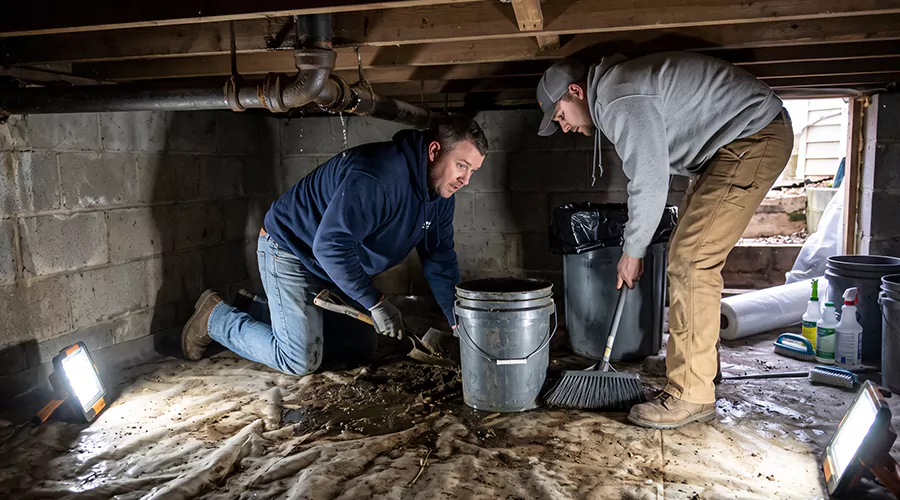
Crawl space sewage cleanup cost often falls in the several-thousand-dollar range, with many residential sewage cleanup projects costing about $2,000 to $10,000 before major plumbing or structural repairs. A difficult crawl space can cost more because limited access, contaminated insulation, wet soil, and structural drying add labor.
The final price depends on how much sewage entered the space and what it touched. A small backup over a vapor barrier is usually less expensive than wastewater that reaches insulation or floor framing.
What Is Included in Crawl Space Sewage Cleanup Cost?
A cleanup estimate usually covers more than pumping out visible wastewater. Sewage leaves contaminated residue behind, so surfaces must be cleaned before drying is complete.
A typical scope can include:
- Standing wastewater extraction
- Removal of contaminated debris
- Disposal of affected insulation
- Cleaning exposed structural surfaces
- Disinfection of suitable materials
- Drying equipment
- Moisture monitoring
- Vapor barrier replacement when needed
Crawl space sewage cleanup cost may not include the plumbing repair that caused the backup. Sewer-line work or septic repairs are often priced separately.
How Much Should You Budget?
General 2026 sewage cleanup pricing commonly falls around $7 to $15 or more per affected square foot. Many residential sewage losses total roughly $2,000 to $10,000.
| Cleanup Scope | General Planning Range |
|---|---|
| Small contained area | About $2,000 to $4,000 |
| Moderate contamination | About $4,000 to $8,000 |
| Large area with insulation removal | About $7,000 to $12,000+ |
| Severe contamination with repairs | Can exceed $15,000 |
These are planning ranges rather than fixed prices. Difficult access or structural repair can move the total higher.
What Makes Crawl Space Sewage Cleanup More Expensive?
Access is one of the biggest cost factors. Workers may need to perform the same cleanup tasks in a very low space, which makes equipment handling and debris removal slower.
Other cost factors include:
- Total contaminated area
- Depth of wastewater
- Amount of wet insulation
- Condition of the vapor barrier
- Contamination of wood framing
- HVAC duct exposure
- Electrical hazards
- Mold growth after delayed cleanup
Raw sewage cleanup becomes more involved once contamination reaches several building layers.
How Does Wet Insulation Affect the Price?
Contaminated fibrous insulation is difficult to clean thoroughly. It may also hold sewage against the floor framing above the crawl space. Removing insulation adds labor and disposal expense. New insulation is usually a later restoration cost.
| Material | Typical Cost Effect |
|---|---|
| Plastic vapor barrier | Moderate if replacement is needed |
| Fiberglass insulation | Higher when widespread removal is required |
| Exposed concrete | Usually easier to clean |
| Wood joists | May need extended drying |
| HVAC duct insulation | Can increase the scope greatly |
Sewage damage restoration can therefore continue after the initial contamination is removed.
Does Contaminated Soil Increase the Cost?
Yes. Exposed soil makes cleanup harder because wastewater can soak into the ground instead of remaining on a washable surface. Standing sewage should be removed before contaminated debris is addressed. A new vapor barrier should not simply cover wet contaminated soil. The area needs to be cleaned as practical and dried first. Persistent sewage odor after drying can indicate that contamination remains.
How Long Does Drying Take?
Drying often takes about three to seven days for a moderate crawl space loss. Dense wood or widespread saturation can take longer. Dehumidifiers and controlled airflow may be used after wastewater is removed. Moisture readings should guide when drying equipment is removed. The price can rise when equipment must remain in place for extra days.
What Warning Signs Suggest a Higher Cleanup Bill?
The most expensive projects usually involve contamination above the crawl-space floor.
Watch for these conditions:
- Floor insulation is saturated.
- Sewage odor reaches living areas.
- Joists stay wet for several days.
- HVAC ducts are contaminated.
- Electrical wiring is exposed.
- Mold appears on framing.
- Subfloor moisture stays high.
- Wastewater keeps entering.
Emergency sewage cleanup can help limit the affected area when the source is stopped quickly.
What Can You Check Before Getting an Estimate?
You can gather useful information without entering standing sewage. Look from the crawl-space entrance and document what you can see safely.
Record:
- Approximate affected area
- Visible water depth
- Whether insulation is wet
- Whether sewage is still entering
- Condition of the vapor barrier
- Whether HVAC components are affected
Do not crawl through sewage just to measure the space.
When Should You Call a Professional?
Professional sewage cleanup is appropriate when the crawl space contains standing wastewater or widespread contamination. Confined access makes protective handling harder than cleanup on an open floor.
Seek professional assessment when:
- Sewage covers a large area.
- The crawl space is difficult to enter.
- Electrical systems are exposed.
- Insulation is saturated.
- HVAC ducts are contaminated.
- Mold has developed.
- The sewage source cannot be stopped.
How Can You Reduce the Cost of a Future Backup?
Prevention starts with correcting the cause of sewage entry. Repeated backups should be treated as a drainage problem rather than normal crawl-space moisture.
Useful steps include:
- Investigate recurring slow drains.
- Repair damaged sewer lines promptly.
- Maintain septic systems on schedule.
- Consider a backwater valve where suitable.
- Keep crawl-space access clear.
- Inspect the space after plumbing problems.
Conclusion
Crawl space sewage cleanup commonly costs several thousand dollars, with many projects falling around $2,000 to $10,000 before major repairs. Wet insulation and difficult access can raise the price. Costs increase further when contamination reaches framing or HVAC components. A useful estimate should separate sewage cleanup from plumbing repairs and later reconstruction so you can see what drives the total.
Frequently Asked Questions
How much is crawl space sewage cleanup per square foot?
General sewage cleanup often runs about $7 to $15 or more per affected square foot. Crawl-space access can push costs higher.
Does the cleanup price include plumbing repair?
Usually not. Cleanup handles contamination while plumbing work fixes the backup source.
Does wet insulation need to be replaced?
Contaminated fibrous insulation often needs removal because sewage can penetrate the material.
Can cleanup cost more than $10,000?
Yes. Large crawl spaces with insulation removal or structural drying can exceed that amount.
Does a new vapor barrier count as cleanup?
It may be part of restoration. The contaminated area should be cleaned and dried before a new barrier is installed.
Will homeowners insurance cover crawl space sewage cleanup?
Coverage depends on the policy and cause of the backup. Sewer or drain backup coverage may require a separate endorsement.